

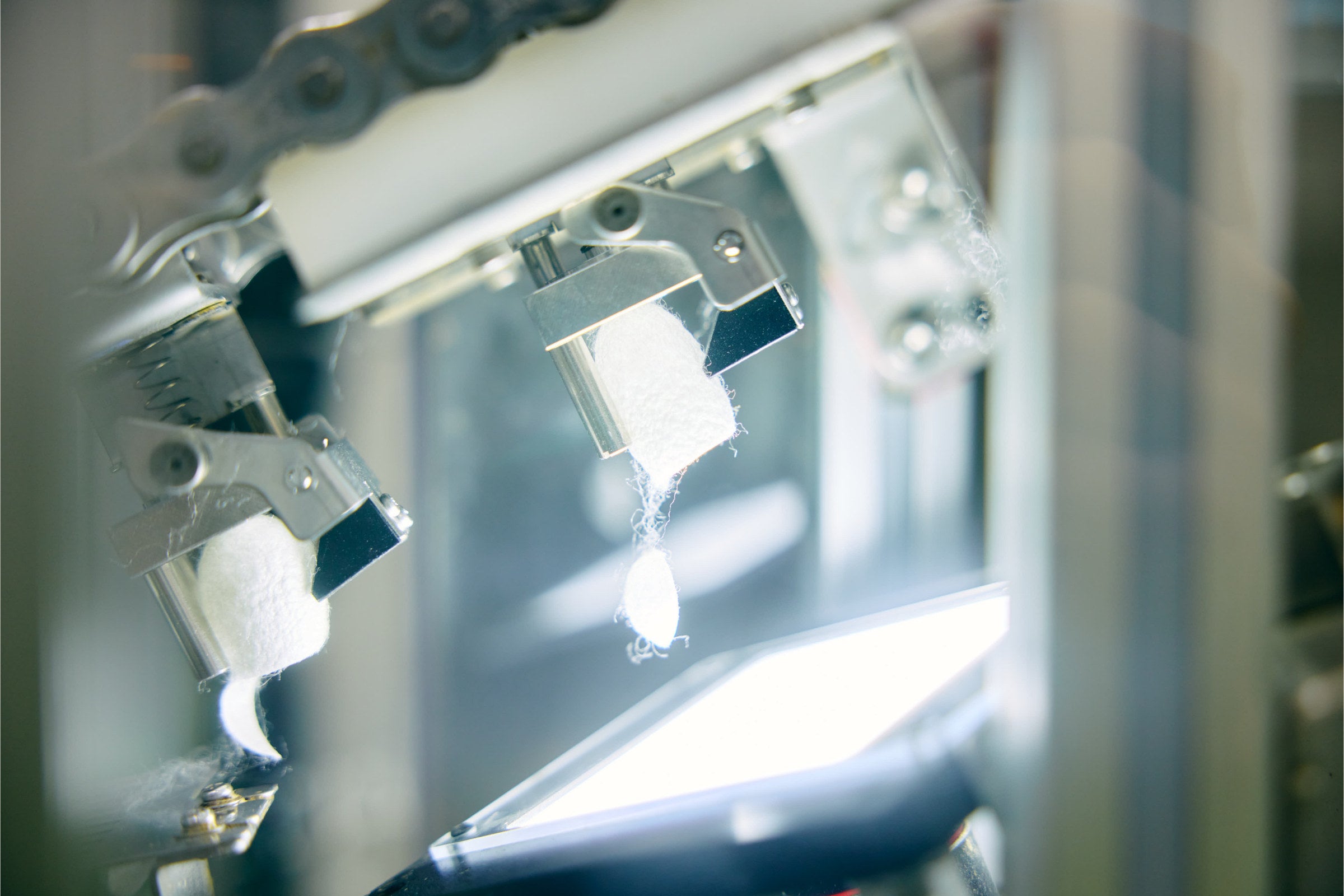
A path to beauty, woven from delicate silk.
Silk, a fabric that brings an elegant presence just by wearing it.
This natural fiber, beloved by royalty and aristocracy in Japan and other countries, is now gaining prominence in the world of body care.
We explored the power within this material through changes and technological innovations in sericulture.
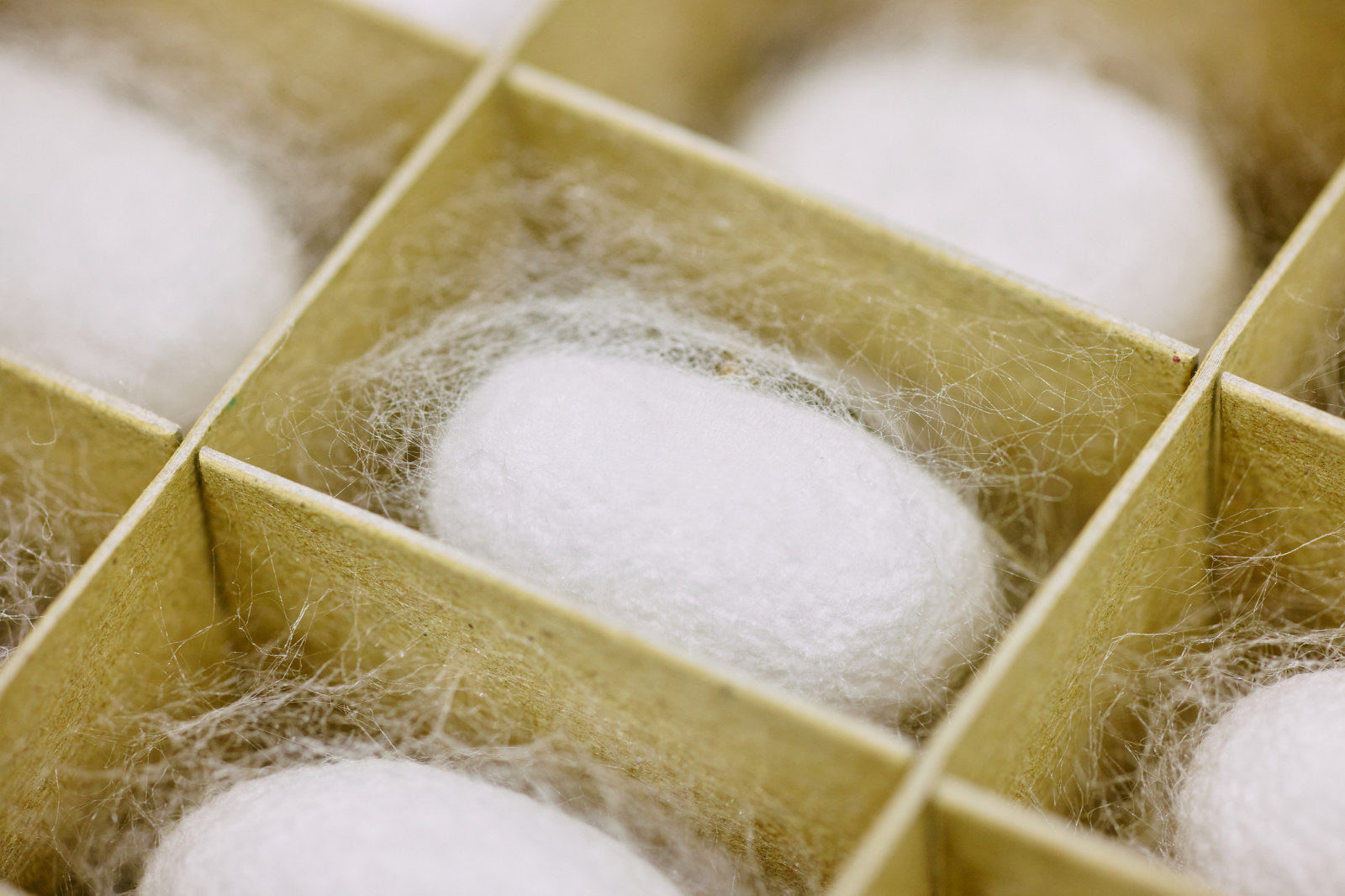
Cocoons look soft, but they are very strong.
From garments to skin. A new form for silk.
Beautiful luster and smooth texture.
Silk, also known as the "Queen of Fibers," was introduced to Japan from China about 2,000 years ago. Delicate threads were spun from cocoons made by silkworms, woven into fabrics, and tailored into obi and kimonos. The graceful appearance created by silk fabrics has supported Japanese clothing culture since the Nara and Heian periods.
During the mid-Edo period, raw silk production increased. In the trade that began at the end of the Edo period, silk became Japan's largest export. In 1872, the Meiji government established the government-operated Tomioka Silk Mill, embarking on mechanization. The high-quality products created with an emphasis on "high quality" were highly acclaimed in Europe and the United States, and by 1909, Japan had become the world's largest exporter.
However, this golden age did not last long. Due to fluctuations in global affairs and the spread of chemical fibers, the environment surrounding Made-in-Japan silk continued to face turbulent times. In fact, the number of silkworm farmers, which exceeded 2.2 million households in its peak year of 1929, had decreased to 113 households by 2025.
Nevertheless, silk has walked hand-in-hand with our lives. This supple thread not only adds beauty but also holds the power to foster healthy skin.
Can it really create "silky smooth skin"?
Just as smooth, elegantly lustrous skin is called "silk skin," silk has long captivated us as a symbol of beauty.
This term, previously used mostly as a metaphor, has recently gained attention as a raw material for beauty products, as silk itself has been found to possess the potential to nurture such skin.
Its origin lies in its main component, fibroin. This protein, with an amino acid composition similar to collagen and elastin, which make up the skin, has a high affinity for skin, allowing it to be utilized as a moisturizing agent. Furthermore, due to its property of softly diffusing light, it is also said to play a role in enhancing translucency.
On the other hand, the production of domestic silk is on a downward trend, so the amount that can be used in cosmetics is limited. To overcome this challenge, efforts are underway to incorporate advanced technology into sericulture and silk reeling, paving the way for the future.
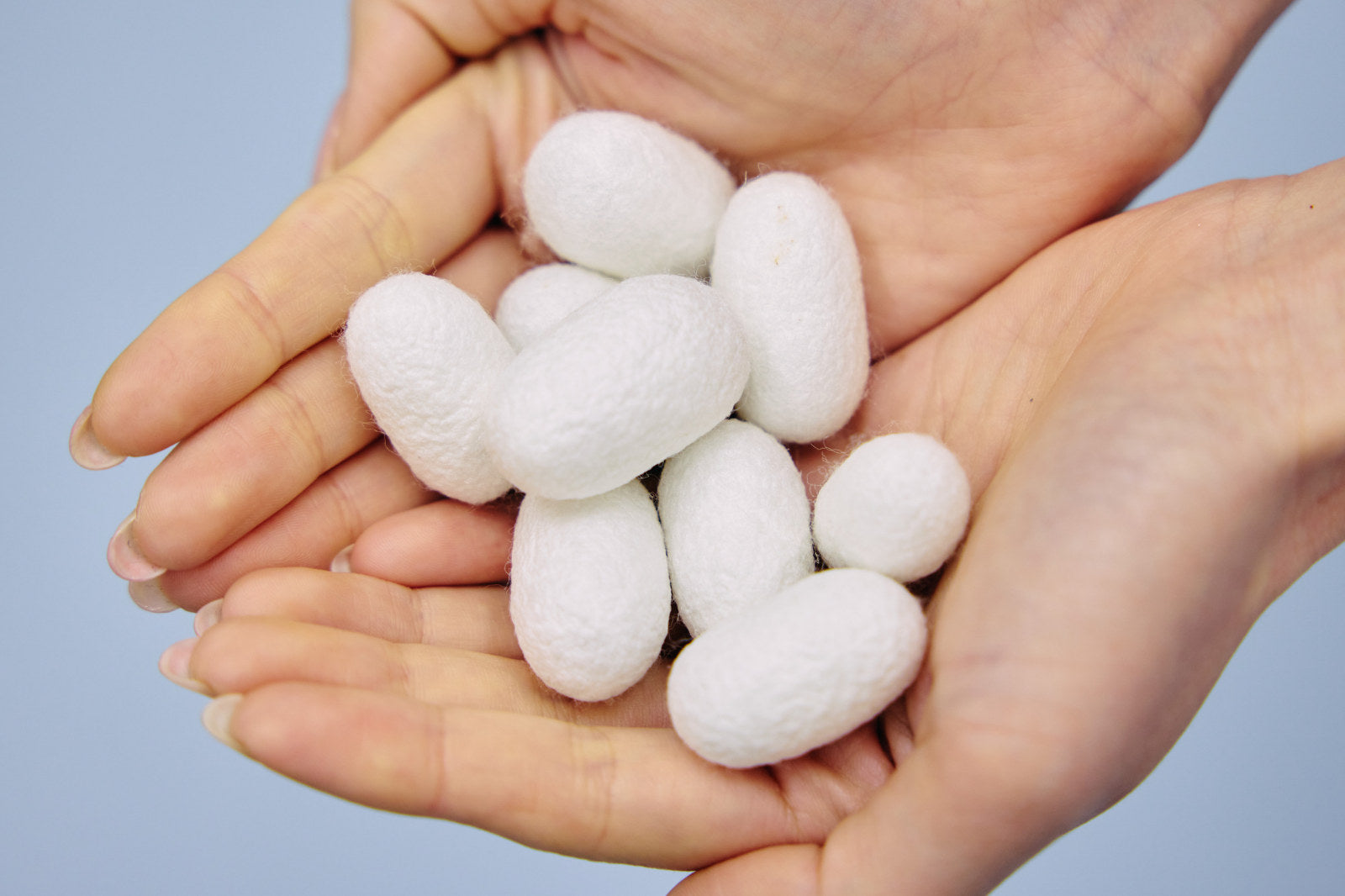
A cocoon, about 30mm in size, yields 1300m of raw silk.
To connect to the next generation of producers.
A new endeavor was underway in Tsukuba, Japan's largest science city. It was about a 20-minute drive from Tsukuba Station to the Innovation Hub of Shinryo Corporation, which has been involved in HVAC engineering and design for 70 years. Here, the latest technologies, such as decarbonization technologies developed for offices and hospitals, are being experimented with. One of these is an environmental control technology, which they are leveraging to develop a "smart sericulture system" that aims to reduce labor and achieve stable production in silkworm farming.

An innovation hub where cutting-edge technology research and development unfolds.
The company's "MayuFacture®" is a silkworm rearing system that automatically creates a comfortable environment (temperature, humidity, and airflow) for silkworms. One "MayuFacture®" unit (12 shelves) can rear approximately 30,000 silkworms at once, enabling rearing in a more compact space that would traditionally require about 15 tatami mats.
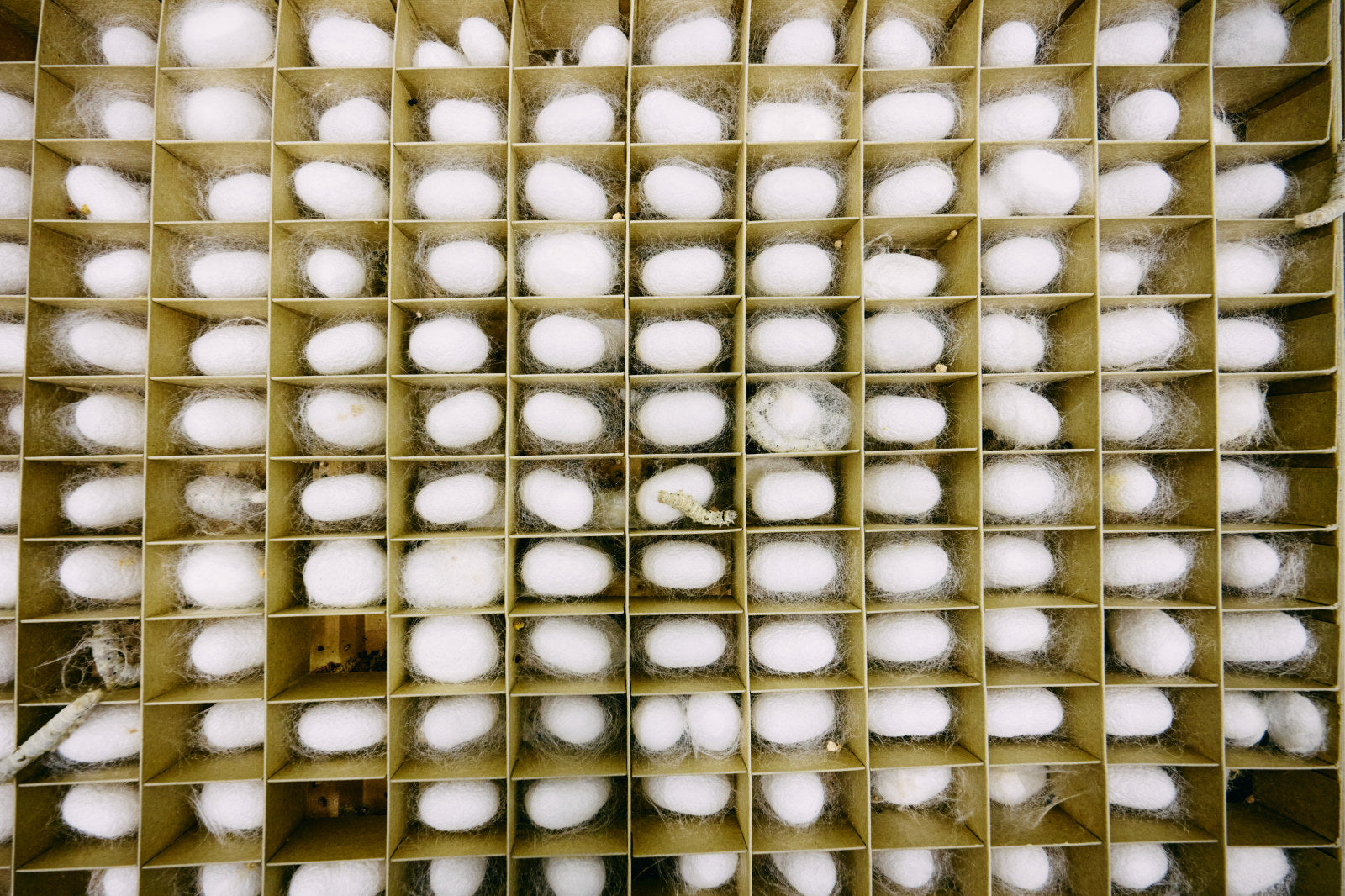
Just before spinning silk, silkworms are moved to partitioned frames called "mabushi" to help them form cocoons more easily.
Silkworms hatch approximately 15 days after eggs are placed in the device, then grow over about 30 days, repeatedly molting. Around one month after birth, they begin spinning silk to form cocoons. At their peak, 700 silkworms can consume nearly 2 kg of food, an astonishingly voracious appetite.
After mounting (jōzoku / letting silkworms spin silk), cocoons are harvested approximately one week later. Shinryo Corporation efficiently manages their breeding and also devises innovative feeding methods. This helps alleviate the burden on farmers.
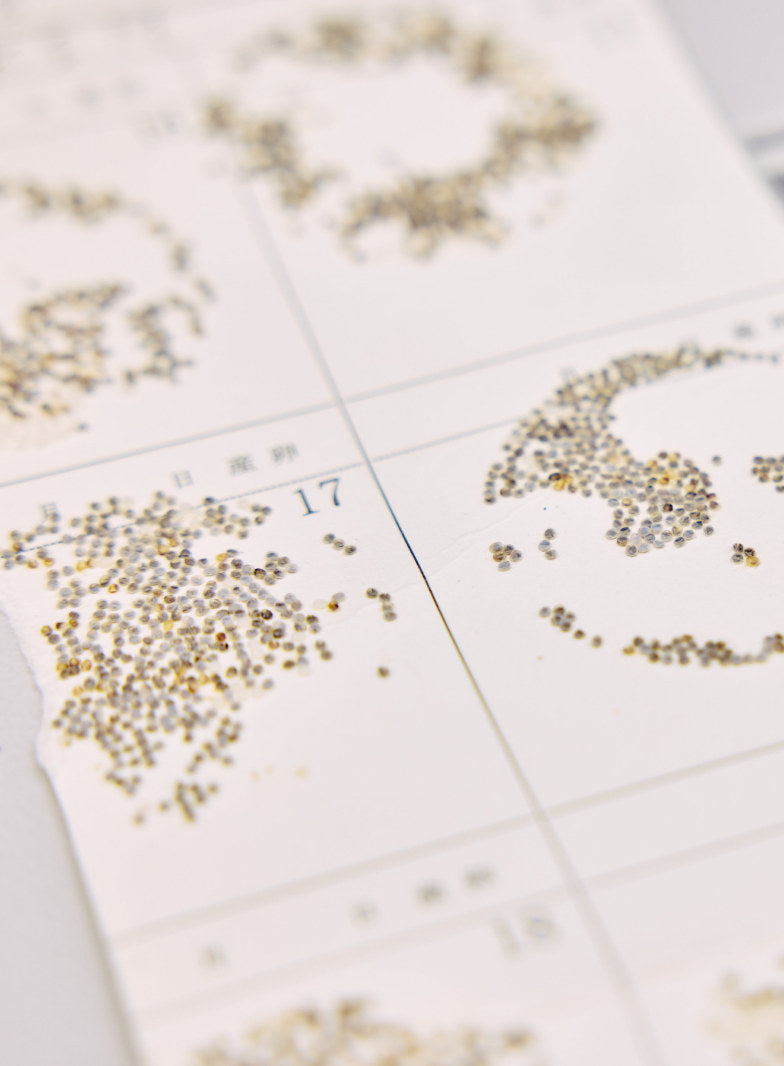
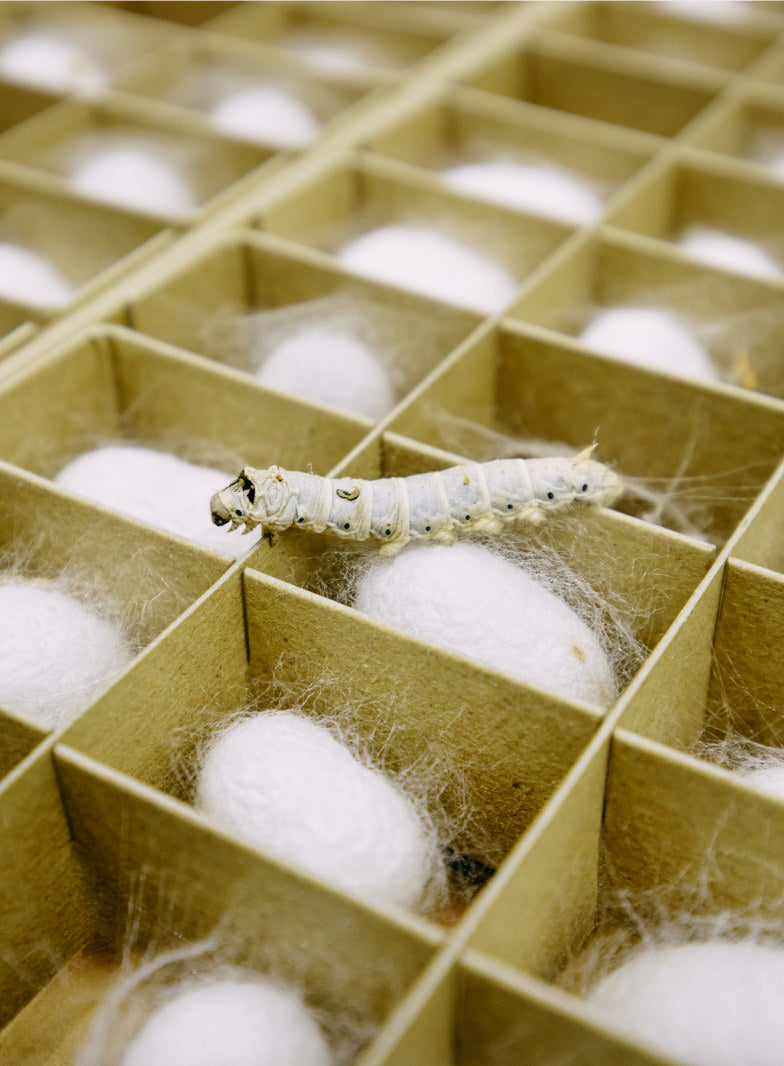
With "Smart Sericulture," the rearing cycle, which used to be about 5 times a year, can now be 10 times. In addition to producing about 10 kg of raw silk per rearing, quality control and production history are also easier to manage.
The emergence of the latest specialized equipment is lowering the barrier to entry for sericulture and is becoming a "starting point" for passing the baton to the next generation of farmers. At the same time, with the establishment of a high-quality mass production system, expectations are rising for new uses for silk.
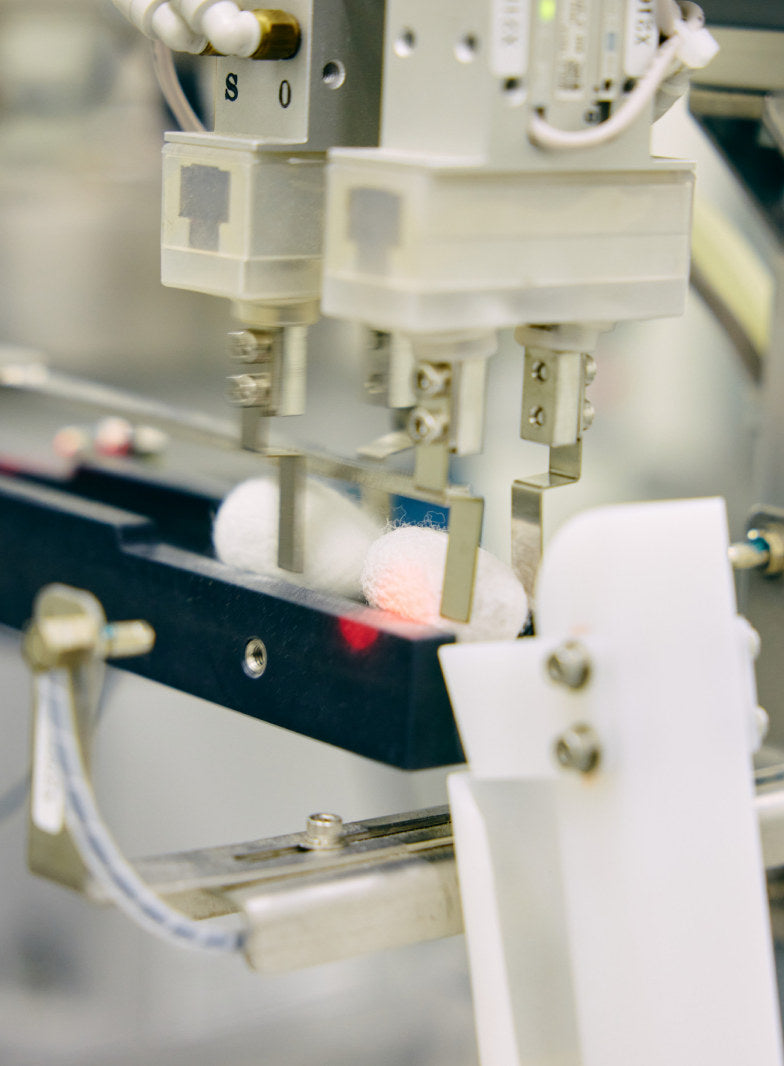
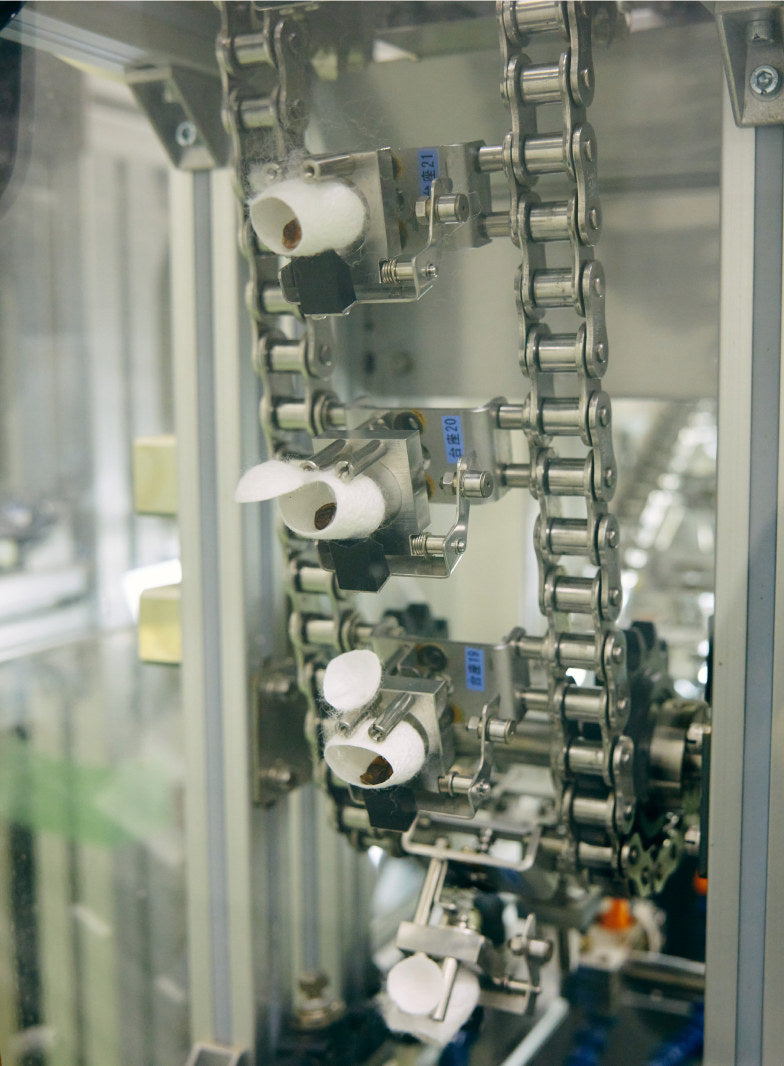
Specialized techniques bring out the best in the ingredients.
United Silk, which has been working to revitalize the silk industry since 2016 in Ehime Prefecture, known as one of western Japan's leading sericultural prefectures. The company has established a stable production system by introducing "Mayufacture®."
Based on the belief of "transmitting high-quality materials from the regions," the company has conducted extensive research to make more people aware of the charm of silk, and has found a new path for it as a cosmetic ingredient.
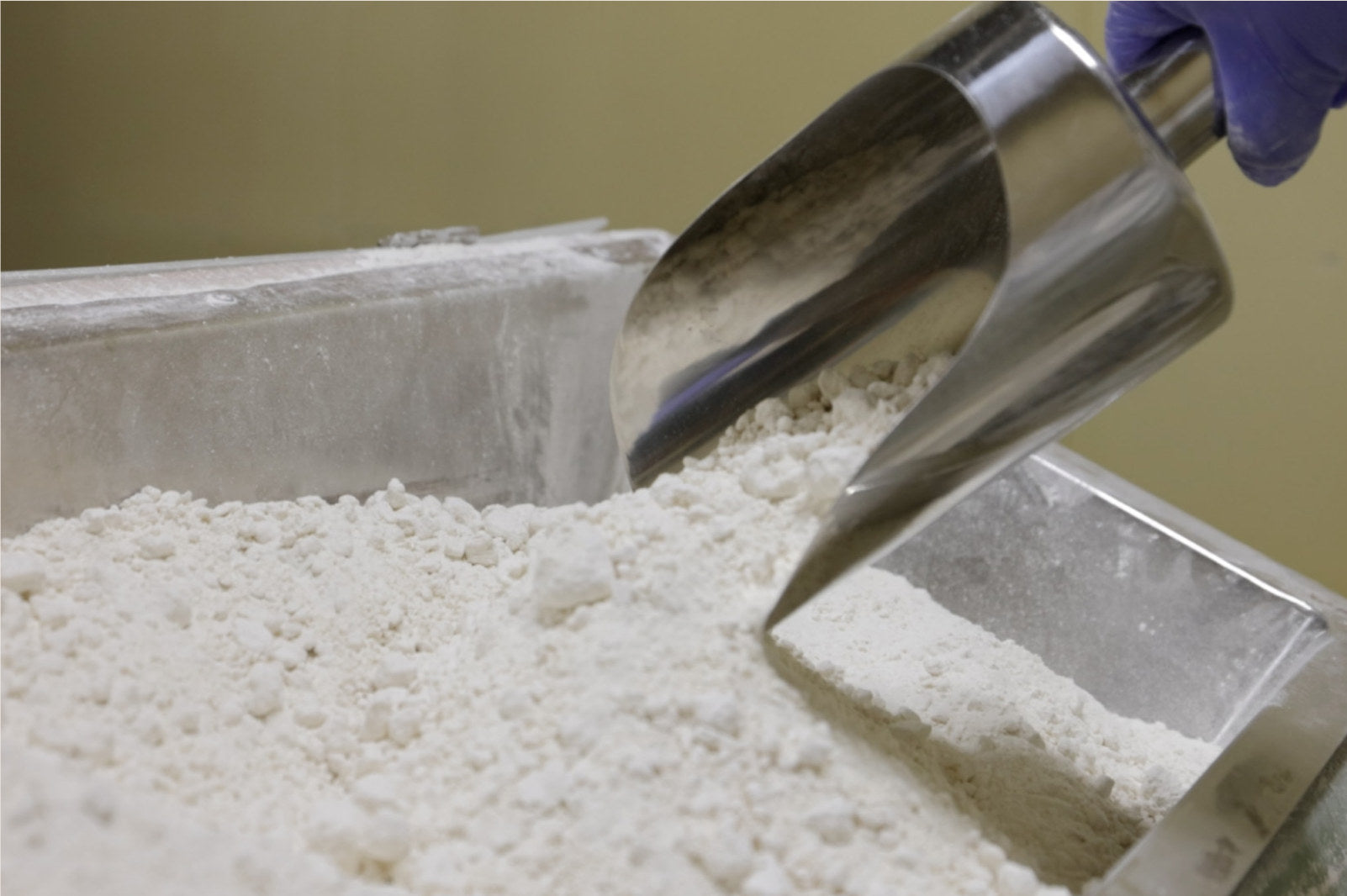
The pure white powder "Smartsilk®", born through trial and error, is also a key ingredient in Obi.
The key to this is our proprietary technology for processing fibroin, the main component of silk, into a delicate powder. After extracting this component from cocoons, we refine it into particles smaller than pollen. While it sounds simple when written down, it took nearly 10 years to establish this unique manufacturing method.
The silk powder "Smartsilk®," created in this way, retains the inherent properties of silk and has now been incorporated into body care products.
It is included in Obi's Massage Body Cream, Softening Body Cream, and Smoothing Body Scrub. A fiber that supported traditional industries has been developed into a material through cutting-edge technology. What was once just an expression, "silk skin," has now actually become one of the things that cultivates "beauty."
* "Smartsilk®" is a registered trademark of Sankyo Seiko, United Silk, and Shinryo Corporation. It indicates that the silk is derived from cocoons produced using "Mayufacture®".
Text: Mako Matsuoka/Photographs: Yu Inohara Reference: Report, "Silk Cocoons and Silk: Community Development Through History and Culture" (Public Interest Incorporated Foundation, Dainihon Sanshikai)